Influencer marketing has evolved into one of the strongest channels for brand growth. With creators now driving product discovery and consumer trust, brands need structured tools that simplify creator discovery, outreach, campaign tracking, and performance measurement.
This guide covers the best influencer marketing platforms that help brands scale creator programs with clarity and precision.
Why Brands Need Influencer Marketing Platforms?
Influencer campaigns involve multiple moving parts and managing everything manually becomes inefficient when the creator list grows. Dedicated platforms help solve problems like:
- Difficulty in finding authentic creators across niches
- Manual tracking of campaigns and deliverables
- Fraud detection and follower quality verification
- Payment management and creator communication
- Measuring ROI and performance across channels
Brands use these platforms to work faster and make better decisions without relying on guesswork.
Key Criteria for Choosing the Right Platform
Choosing the best influencer marketing platform requires more than comparing prices. Brands need to understand how each tool handles creator discovery, analytics, campaign execution, and long term influencer management. Below is an expanded and detailed breakdown of the core evaluation criteria that matter the most.
- Creator Discovery
Ability to find influencers using filters like niche, location, audience traits, engagement levels, and platform type. - Audience Analytics
Accuracy of follower demographics, engagement quality, authenticity checks, and fake follower detection. - Campaign Management
Tools for tracking deliverables, timelines, content approvals, and overall workflow coordination. - Influencer CRM
Central place to store creator details, communication history, rates, and previous campaign data. - UGC and Content Handling
Automatic content collection, asset storage, usage rights, and performance insights. - Reporting and Insights
Clear dashboards that show performance metrics like reach, engagement, conversions, and ROI. - Pricing and Scalability
Plans that fit small or large teams with transparent limitations based on features or creator volume. - Ease of Use
Simple interface, quick onboarding, and smooth navigation that helps teams work efficiently.
Best Influencer Marketing Platforms (Top Picks)
Below are the industry leading tools with their strengths, ideal users, and pricing notes.
Modash
Platform Coverage:
Instagram TikTok YouTube X Snapchat and profile recognition for additional platforms.
Best For:
Brands that need fast influencer discovery at scale combined with reliable audience analytics.
Pricing:
Modash offers flexible monthly and annual plans.
Essential Plan: Starts at $299 per month ($199 when billed annually).
Pro Plan: Includes higher limits and enhanced analytics.
Business Plan: Designed for teams running large volume searches.
Enterprise: Custom pricing based on creator volume and advanced needs.
Reviews:
4.8 / 5.0
Ease of Use (UX/UI):
Modash has a clean interface with intuitive filters that help users find creators quickly. New users can learn the basics fast although advanced tools may take some time to explore.
Customer Support:
Support options include email help, onboarding assistance, documentation, and a dedicated help center. Response times may vary between plan tiers.
Modash Standout Features
Find Your Fans:
Identifies influencers who already follow or engage with your brand increasing the likelihood of genuine collaborations.AI Powered Discovery:
Allows brands to search using image or text based prompts for highly relevant creator recommendations.Real Time Content Tracking:
Monitors influencer posts as they go live so campaign performance can be assessed immediately.Large Creator Pool:
Access to hundreds of millions of public creator profiles suitable for both niche and large scale campaigns.Automated UGC Collection:
Collects influencer content automatically through tracked hashtags or mentions.Shopify Based Affiliate Tools:
Supports discount code generation gifting workflows and affiliate tracking for Shopify brands.
Modash Pros and Cons
| Pros | Cons |
|---|---|
| Extensive Creator Database: Large searchable pool of global creator profiles. | Limited Integrations: Beyond Shopify the platform does not offer broad ecommerce connections. |
| Advanced Discovery Tools: Strong filters AI search and detailed audience insights. | Weak Content Rights Tools: Limited built in features for content licensing and rights management. |
| Scalable Outreach: Supports bulk creator workflows and affiliate code automation. | No Paid Media Features: Does not offer whitelisting or paid ad integration. |
| Integrated Analytics: Includes performance tracking and real time content monitoring. | Higher Cost for Smaller Teams: Lower tiers may still feel expensive for small brands. |
Aspire

Platform Coverage:
Instagram TikTok YouTube Pinterest Facebook and creator marketplace integrations for additional channels.
Best For:
Brands that want a combined creator marketplace and end to end influencer relationship management in one platform.
Pricing:
Aspire offers flexible plans depending on team size and campaign volume.
Core Plan: Covers creator discovery campaign setup and basic tracking.
Advanced Plan: Adds deeper analytics higher creator limits and collaboration tools.
Full Suite Plan: Includes CRM UGC management affiliate workflows and content rights handling.
Enterprise: Custom pricing with tailored onboarding for larger teams.
Reviews:
4.7 / 5.0 (G2)
Ease of Use (UX/UI):
Aspire has a user friendly marketplace style interface that is easy to navigate. Campaign boards and communication threads are clean which makes collaboration smooth even for beginners.
Customer Support:
Support includes live chat onboarding specialists a help center video guides and customer success managers for higher plans.
Aspire Standout Features
Creator Marketplace:
Gives brands instant access to creators who opt in for collaborations making outreach fast.Campaign Collaboration Boards:
Visual boards help manage briefs approvals content status and deliverables across teams.UGC Asset Library:
Collects and organizes creator content automatically for easy reuse across paid and organic channels.Influencer CRM:
Stores creator profiles communication history preferred rates and contract records.Affiliate and Ambassador Tools:
Helps brands run long term influencer programs with codes payouts and performance tracking.Product Seeding Automation:
Streamlines gifting shipping and product dispatch for influencer campaigns.
Aspire Pros and Cons
| Pros | Cons |
|---|---|
| Marketplace Access: Opt in creators make sourcing faster for new brands. | Custom Pricing Model: Hard for small teams to estimate costs without contacting sales. |
| Strong Collaboration Tools: Boards and threads keep workflows organized. | Analytics Not Enterprise Level: Data depth is mid range compared to enterprise platforms. |
| Built In UGC Library: Useful for content heavy marketing teams. | Limited Paid Media Tools: No built-in ad whitelisting or paid boosting features. |
| Great for Ambassador Programs: Affiliate codes and tracking help manage long term creators. | Learning Curve for CRM: Advanced CRM features require some onboarding time. |
CreatorIQ
Platform Coverage:
Instagram TikTok YouTube Facebook LinkedIn X Twitch and extended API integrations across additional channels.
Best For:
Large brands and agencies that need enterprise level analytics workflows and integrations for complex influencer programs.
Pricing:
CreatorIQ operates on enterprise plans only with tailored pricing.
Enterprise Core: Includes creator discovery analytics campaign workflows and reporting.
Enterprise Plus: Adds deeper integrations team permission controls and advanced measurement.
Enterprise Custom: Built for global teams with multi market needs and high volume activation.
Reviews:
4.6 / 5.0 (G2)
Ease of Use (UX/UI):
CreatorIQ has a robust dashboard built for data heavy workflows. The interface is powerful but requires onboarding due to the depth of tools available.
Customer Support:
Support includes dedicated account managers onboarding sessions technical support priority channels and professional services for enterprise clients.
CreatorIQ Standout Features
Enterprise Creator Graph:
Uses advanced data science to map creator relationships engagement patterns and audience quality.Integrated Campaign Workflows:
Covers everything from discovery to approvals content tracking and cross channel reporting.Benchmark and Competitive Insights:
Allows brands to compare performance metrics influencers and categories at a market level.Fraud and Authenticity Scoring:
Evaluates audience credibility engagement health and potential indicators of fake activity.Deep Integrations:
Connects with enterprise tools including CRM systems BI dashboards and marketing databases.Advanced Measurement Suite:
Provides detailed ROI modeling sales attribution and impact reporting.
CreatorIQ Pros and Cons
| Pros | Cons |
|---|---|
| Built for Enterprises: Handles large multi-market influencer programs with ease. | High Pricing: Requires enterprise budget and long term commitment. |
| Advanced Reporting: Deep metrics attribution tracking and benchmarking. | Requires Onboarding: Platform complexity means teams need guided training. |
| Strong Integrations: Easy to connect with existing enterprise systems. | No Entry Level Plans: No solution available for small teams or new brands. |
| For Serious Data Teams: Ideal for analytics focused organizations. | Resource Heavy: Works best when a dedicated team manages it. |
Upfluence
Platform Coverage:
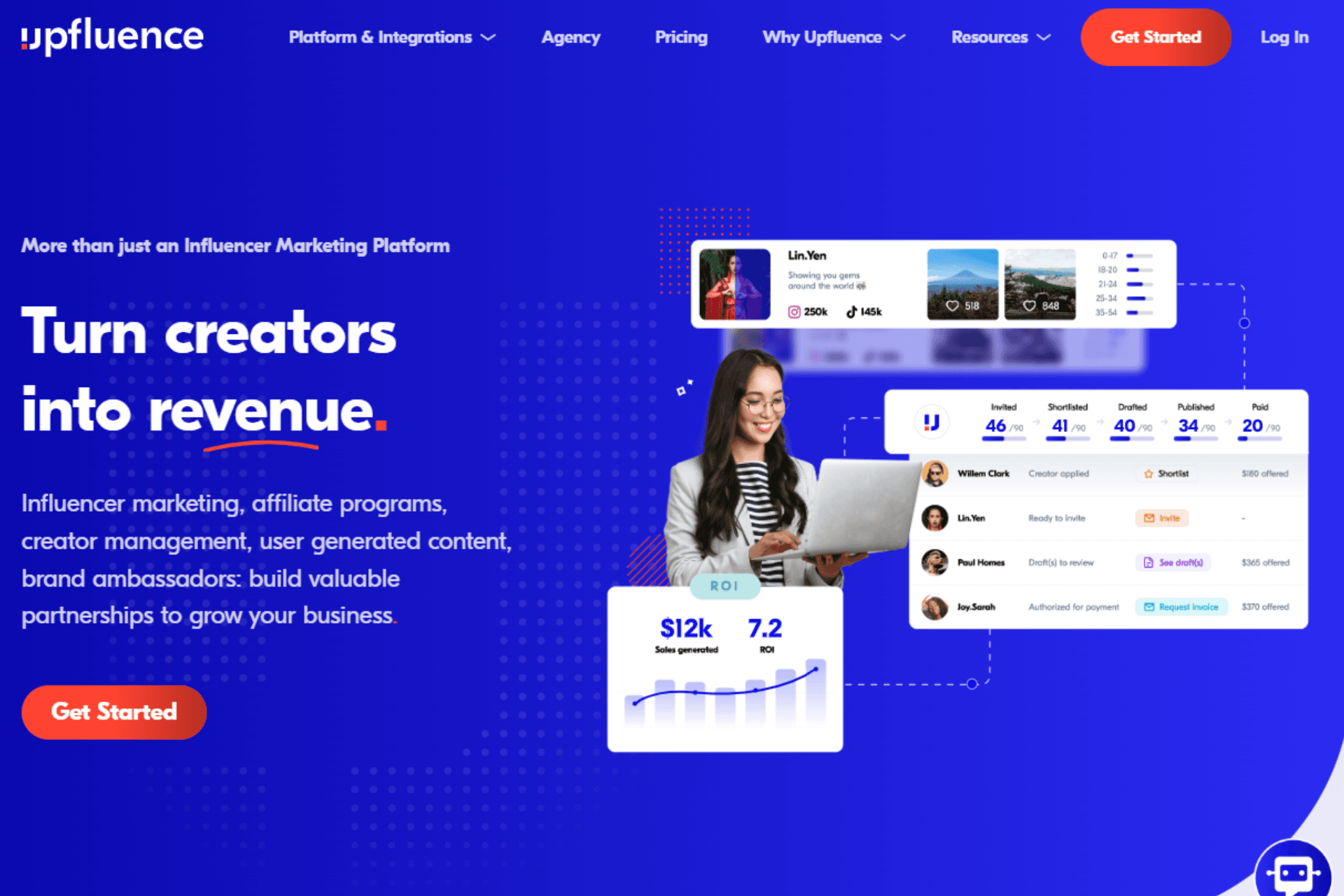
Instagram TikTok YouTube Twitch Pinterest and integrations with major ecommerce platforms including Shopify WooCommerce and BigCommerce.
Best For:
Brands that want influencer marketing combined with ecommerce workflows affiliate tracking and product seeding.
Pricing:
Upfluence offers tiered plans based on team size data volume and ecommerce needs.
Growth Plan: Includes influencer search campaign tools and basic ecommerce integration.
Scale Plan: Adds higher creator limits expanded analytics and advanced affiliate features.
Enterprise Plan: Offers custom workflows data sync and multi store support.
Custom Pricing: Tailored to brands with complex ecommerce infrastructure.
Reviews:
4.4 / 5.0 (G2)
Ease of Use (UX/UI):
Upfluence has a structured interface built around ecommerce performance. Its analytics and creator profiles are clean although deeper features may require onboarding to master.
Customer Support:
Support includes onboarding specialists ecommerce integration help center resources chat support and dedicated customer success managers.
Upfluence Standout Features
Ecommerce Integrations:
Syncs with Shopify WooCommerce and BigCommerce for direct sales tracking through influencer links and codes.Affiliate Management Suite:
Centralizes affiliate codes payouts commissions and performance insights.Product Seeding Tools:
Automates gifting workflows from product selection to shipping updates.Influencer CRM:
Stores communication history rates personal notes and collaboration status for long term programs.Campaign Dashboard:
Tracks deliverables timelines content approvals and final reports.Influencer Search Engine:
Filters creators by niche audience location engagement and commerce potential.
Upfluence Pros and Cons
| Pros | Cons |
|---|---|
| Strong Ecommerce Sync: Ideal for brands focused on sales and affiliate revenue. | Custom Pricing: Costs are not transparent and require speaking with sales. |
| Advanced Affiliate Tools: Great for ambassador and long term creator programs. | Initial Setup Required: Connecting ecommerce stores takes onboarding time. |
| Full CRM Functionality: Helps brands manage creator relationships efficiently. | Complex for Small Teams: Works best when a team can manage multiple features. |
| Good for Performance Marketing: Tracks revenue attribution directly. | Content Rights Limited: Fewer tools for licensing or whitelisting. |
Traackr
Platform Coverage:
Instagram TikTok YouTube Facebook X LinkedIn and multi region insights through global data coverage.
Best For:
Enterprise and mid market brands running multi country influencer programs with a heavy focus on analytics benchmarking and spend optimization.
Pricing:
Traackr operates on annual and enterprise level contracts.
Professional Plan: Designed for mid size teams needing analytics and influencer evaluation.
Enterprise Plan: Adds multi market capabilities collaboration controls and advanced reporting.
Global Plan: Tailored for international brands with regional teams and high volume campaigns.
Custom Pricing: Based on the size complexity and number of markets involved.
Reviews:
4.4 / 5.0 (G2)
Ease of Use (UX/UI):
Traackr has a data heavy interface that is structured cleanly. While powerful it requires onboarding to fully understand benchmarks and influencer scoring systems.
Customer Support:
Support includes onboarding specialists account managers training sessions dedicated enterprise channels and detailed documentation.
Traackr Standout Features
Influencer Market Benchmarking:
Compares creator performance within specific regions categories and market segments.Spend Optimization Tools:
Predicts influencer ROI tracks cost efficiency and highlights best performing creator types.Audience and Authenticity Analysis:
Provides detailed demographic breakdowns engagement quality and authenticity indicators.Global Campaign Insights:
Helps brands evaluate campaign impact across multiple markets with unified reporting dashboards.Influencer Relationship Scoring:
Identifies which creators are the best long term fit based on engagement patterns and historical performance.Workflow and Collaboration Tools:
Tracks deliverables timelines communications and approvals across regional teams.
Traackr Pros and Cons
| Pros | Cons |
|---|---|
| Strong Analytics: Great for data driven strategies and market comparisons. | High Pricing: Designed primarily for enterprise budgets. |
| Great for Global Brands: Supports multi region campaign structures. | Not Beginner Friendly: Requires onboarding to understand all metrics. |
| Spend Optimization: Helps improve influencer efficiency and ROI. | Limited Creator Marketplace: Not suited for brands wanting opt in creator marketplaces. |
| Reliable Data Quality: Accurate audience analysis and authenticity signals. | Less Ideal for Small Teams: May feel overwhelming without a dedicated strategy team. |
Influencity

Platform Coverage:
Instagram TikTok YouTube Facebook X and creator databases with global search capabilities.
Best For:
Brands and agencies that want a balanced mix of influencer discovery CRM campaign workflows and audience analytics at mid tier pricing.
Pricing:
Influencity offers modular and scalable plans.
Basic Plan: Includes creator search audience metrics and list management.
Professional Plan: Adds campaign workflows enhanced insights and increased search limits.
Business Plan: Designed for teams managing multiple clients or large scale campaigns.
Enterprise: Custom pricing with tailored features and onboarding.
Reviews:
4.6 / 5.0 (G2)
Ease of Use (UX/UI):
Influencity has a clean modern dashboard that is easy to learn. Its navigation is straightforward and most tools are accessible without a steep learning curve.
Customer Support:
Customer support includes email help onboarding guides tutorials a help center and optional customer success managers for larger plans.
Influencity Standout Features
Influencer Discovery Engine:
Advanced filters for niche audience location engagement rate and follower authenticity.Audience and Demographic Insight:
Breakdown of age location gender interests and engagement quality for better targeting.Influencer CRM System:
Stores relationships notes communication history and collaboration status across creators.Campaign Management Tools:
Tracks timelines deliverables briefs and content approvals inside a unified dashboard.List and Segment Builder:
Allows teams to categorize influencers into lists for campaigns niches and market segments.Automated Reporting:
Generates performance reports with reach engagement and creator comparison metrics.
Influencity Pros and Cons
| Pros | Cons |
|---|---|
| Balanced Features: Includes discovery CRM and campaign tools in one platform. | Mid Tier Pricing: Higher than basic SMB tools but lower than enterprise platforms. |
| Easy to Onboard: Simple layout suitable for beginners and growing teams. | Analytics Less Advanced: Not as deep as enterprise tools like Traackr or CreatorIQ. |
| Strong CRM Functionality: Useful for teams managing ongoing creator relationships. | Creator Pool Smaller: Database is smaller compared to large enterprise platforms. |
| Flexible Modular Plans: Brands can pay only for the features they need. | Limited Integrations: Fewer third party connections compared to higher end tools. |
Heepsy

Platform Coverage:
Instagram TikTok YouTube and basic coverage for bloggers and niche creators across smaller platforms.
Best For:
Small and medium sized brands that need affordable influencer discovery with essential analytics and simple exporting features.
Pricing:
Heepsy provides budget friendly tiered plans.
Starter Plan: Includes basic discovery filters profile previews and simple analytics.
Business Plan: Adds full profile access advanced filters and audience metrics.
Gold Plan: Offers higher search limits contact exports and deeper demographic data.
Enterprise: Custom pricing for teams needing bulk data and API access.
Reviews:
4.5 / 5.0 (G2)
Ease of Use (UX/UI):
Heepsy has a straightforward interface that is very easy to learn. Searches load quickly and the layout is clean which suits smaller teams and beginners.
Customer Support:
Support includes email assistance help center articles tutorials and optional onboarding guidance depending on the plan.
Heepsy Standout Features
Affordable Creator Discovery:
Provides cost effective access to influencers across major social platforms.Audience Insight Tools:
Displays key demographic data like age location and engagement patterns.Exportable Lists:
Lets brands export influencers into spreadsheets for offline review and outreach.Influencer Filters:
Filter creators by category follower count location engagement rate and language.Influencer Authenticity Checks:
Simple scoring system to help detect low quality or inactive followers.Campaign Shortlist Builder:
Helps organize selected influencers into groups for campaign planning.
Heepsy Pros and Cons
| Pros | Cons |
|---|---|
| Budget Friendly: Great option for small brands and new marketers. | Basic Analytics: Data depth is limited compared to advanced platforms. |
| Simple Interface: Quick and easy to use for beginners. | No CRM Tools: Lacks full influencer relationship management features. |
| Fast Search: Loads results quickly with minimal lag. | Smaller Database: Creator pool is smaller than enterprise platforms. |
| Useful for SMB Campaigns: Affordable and practical for lighter use cases. | Limited Integrations: Few connections to external marketing tools. |
Final Thoughts
Influencer marketing has grown into a core part of how brands build trust visibility and long term customer relationships. The platforms in this list help simplify everything from creator discovery to campaign execution and performance tracking. Each tool has its own strengths whether it is analytics marketplace access ecommerce workflows or global reporting.
The right platform depends on what your brand values most. Smaller teams may prioritize simple affordable discovery tools while established brands may need deeper analytics and structured workflows. What matters most is choosing a platform that fits your current goals and gives you room to scale your influencer program over time.
FAQs
1. What is the best influencer marketing platform overall?
The best platform depends on your goals. For discovery and audience authenticity Modash is strong. For ecommerce and affiliate programs Upfluence works well. For enterprise campaigns CreatorIQ and Traackr offer advanced analytics and workflows.
2. Which influencer platform is best for small brands?
Heepsy and Influencity are cost effective options. They offer essential discovery tools audience data and simple workflows without requiring an enterprise budget.
3. Which platform is best for deep analytics and fraud detection?
Traackr CreatorIQ and HypeAuditor are known for advanced audience insights authenticity scoring and detailed reporting.
4. What platform helps with affiliate programs and sales tracking?
Upfluence is one of the strongest options for affiliate codes commission tracking and ecommerce integrations.
5. Do influencer platforms help with UGC management?
Yes. Aspire Modash and several others provide tools for collecting storing and organizing UGC which helps brands reuse content across channels.
6. Are these platforms beginner friendly?
Platforms like Heepsy and Influencity are beginner friendly. Enterprise tools like CreatorIQ or Traackr require more onboarding and are best for larger teams.
7. Can influencer marketing platforms track ROI?
Most mid tier and enterprise tools offer performance tracking. Upfluence and CreatorIQ provide deeper attribution data that helps link influencer activity to sales and conversions.